Running a music school, done properly.
Practical, UK-specific guides from inside a 500-pupil school — what to charge, the policies that stop arguments, the tax and term-time maths. No fluff, no recycled American advice.
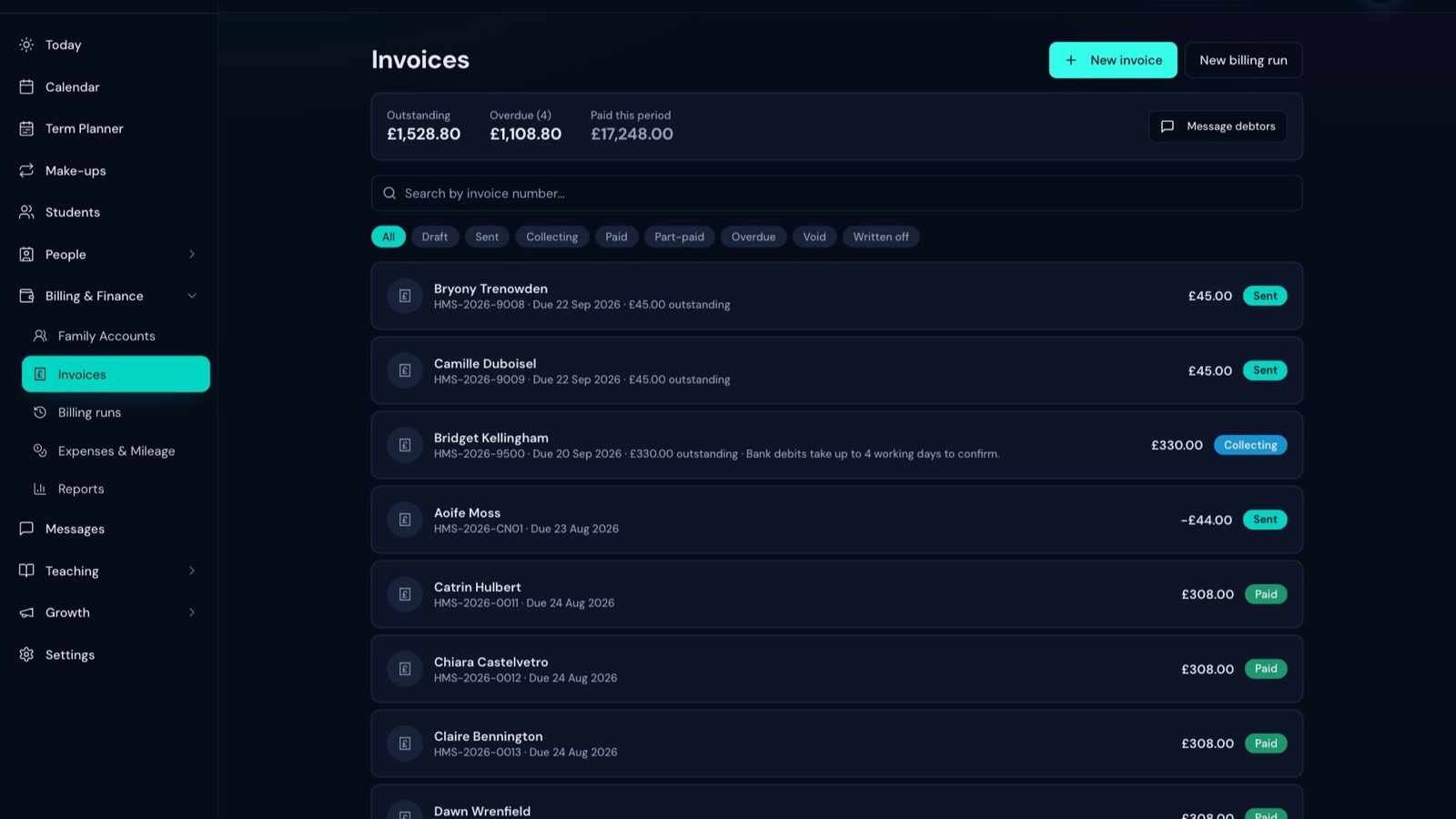
Music school software, compared on the facts
Nine platforms, priced from their own pricing pages on 4 September 2026. Flat vs metered, GBP vs USD, Direct Debit and trials — criteria published first.
Read the guide →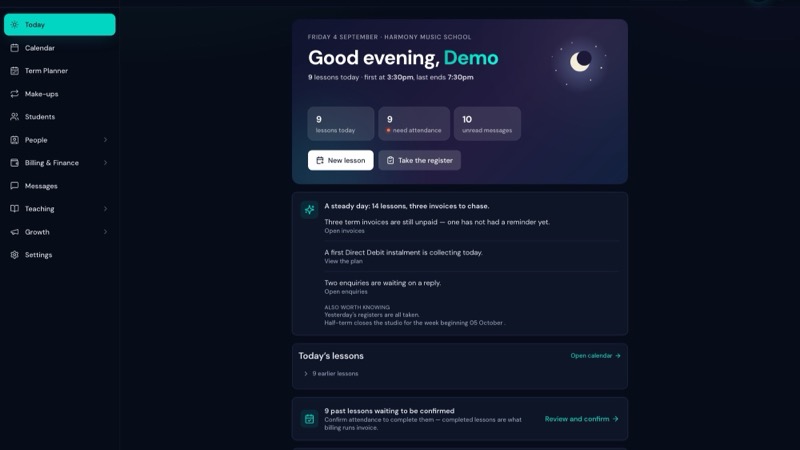
Software for private music teachers, compared on the facts
Six products for solo UK teachers, priced from their own pages on 4 September 2026 — what each meters, who holds your parents' money, and what Self Assessment gets.
Read →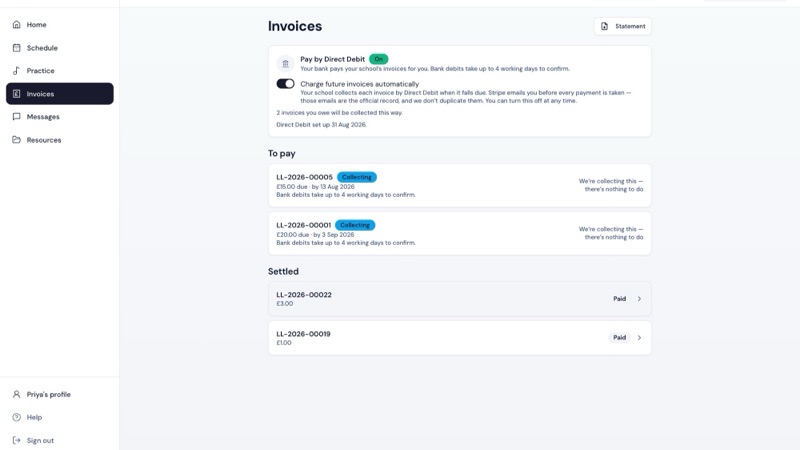
How to collect termly music lesson fees by Direct Debit
Bacs Direct Debit for a UK music school: how mandates work, the four-working-day timing, termly versus monthly, failed payments and late fees.
Read →
How music education works in the UK: a guide for parents and teachers
Music Hubs, the national plan, graded exams and private lessons — how the UK music education system fits together, what each part costs, and where private teaching sits.
Read →
Making Tax Digital: what music teachers need to do
MTD for Income Tax starts 6 April 2026 above £50,000 of qualifying income, 2027 above £30,000, 2028 above £20,000. What counts, what you file, and the penalties.
Read →
Music lesson pricing models: which one to charge, and what each one costs you
Pay-as-you-go, termly, monthly rolling or lesson packs — how each model behaves when a pupil is ill, when a term is short, and when you want to raise your rate.
Read →
The business side of teaching music
Rates, getting paid, the tax year, DBS, insurance and policies — the business half of private music teaching in the UK, with the numbers and the deadlines.
Read →
Running a UK music school, end to end
The teaching year, enrolment, registers, termly fees, Direct Debit, make-ups, hiring and paying teachers, and parents — the whole operating cycle of a UK music school.
Read →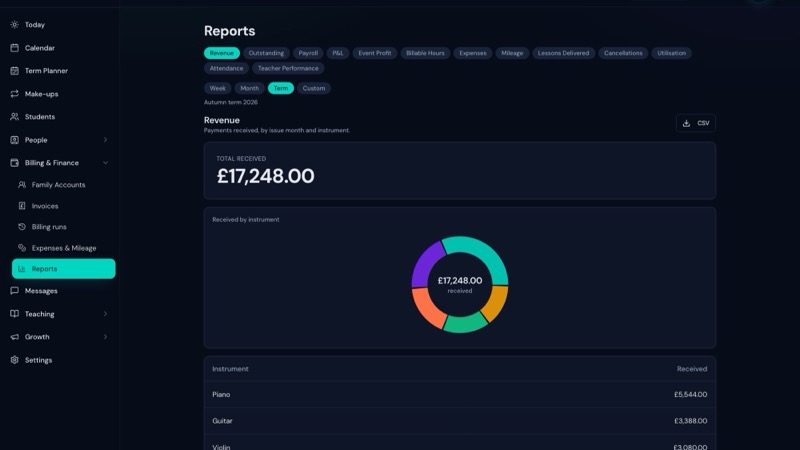
Record keeping for UK music teachers: what to keep, and for how long
HMRC wants self-employed records kept five years past the 31 January deadline. What that means for a music studio, what cash basis changed, and what Making Tax Digital adds.
Read →
Music lesson cancellation policies: the UK guide (with a free template)
What a fair UK cancellation and make-up policy contains, the wording that holds, and a free generator that writes yours in two minutes.
Read →
How much do music lessons cost in the UK? The 2026 guide
What piano, guitar, singing and drum lessons cost across the UK in 2026 — by instrument, region and length — and how to set a rate that holds.
Read →
How many teaching weeks are in a UK school year? Term dates 2026/27 for music teachers
The UK school year is 39 weeks — music teachers teach fewer, unevenly. Count your real year, see why Mondays lose, and set termly fees that add up.
Read →
Self Assessment for music teachers: expenses, Making Tax Digital and the records that save you money
The 2026/27 tax guide for self-employed music teachers: expenses you can claim, Making Tax Digital deadlines, and records that make January boring.
Read →
How to become a private music teacher in the UK — no PGCE required
No PGCE needed: the real route into UK private music teaching — qualifications, DBS, insurance, HMRC, rates and your first ten pupils.
Read →
How much do music teachers earn in the UK? Employed, peripatetic and private studio compared
What UK music teachers earn in 2026 — classroom, peripatetic and private studio compared — and the four levers that raise a private income.
Read →
DBS checks for music teachers: the 2026 guide (including January's rule change)
Which DBS check music teachers need, the January 2026 self-employed change, Update Service costs, and the safeguarding basics parents expect.
Read →The guides have tools
to do the maths for you.
Rates, term dates, admin costs and make-up policies — interactive, free and gate-free. The blog explains it; the tools work it out.
Less reading about admin. Less admin.
30-day free trial. No card. Flat pricing, no per-teacher fees.